
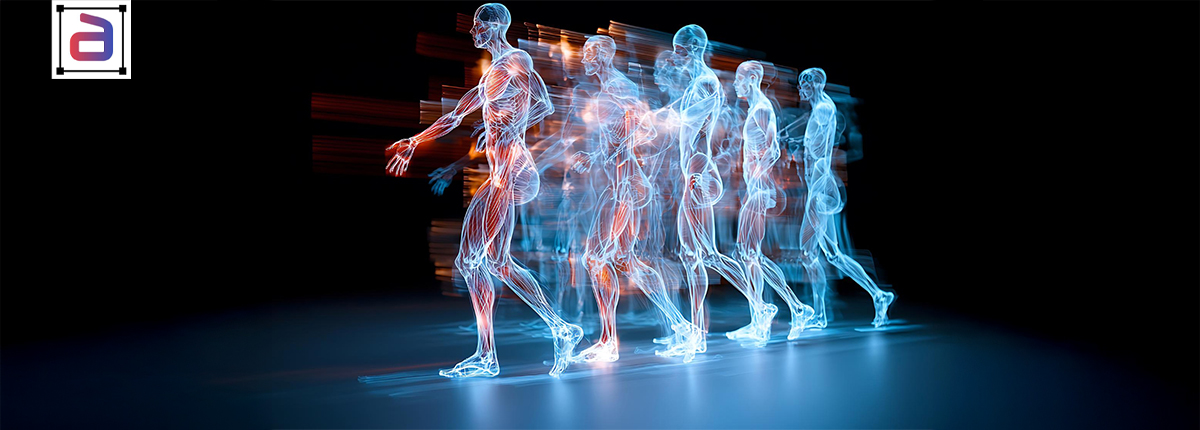
Understanding how the human body moves is fundamental to rehabilitation, performance improvement, and injury prevention. While video capture and sensor data provide raw signals, structured movement modeling turns them into actionable insight. In this context, human skeletal annotation services enable computer vision systems to represent joints, limbs, and motion patterns with clarity and consistency.
For physical therapists and movement specialists, skeletal annotation transforms visual data into objective, measurable insights that support better clinical and therapeutic outcomes.
Table of Contents
Key Points
- Human movement analysis annotation must capture temporal sequence, not just instantaneous pose, to enable AI systems to distinguish movement patterns that appear similar in single frames.
- Clinical movement analysis requires annotation that covers pathological movement signatures — asymmetric gait, compensatory posture — alongside normal movement to train systems with clinical diagnostic value.
- Skeletal annotation for movement analysis must maintain consistent joint definition across sessions and annotators: a shift in wrist keypoint placement changes every joint angle derived from the wrist in downstream analysis.
- Annotation programs for movement analysis AI must include ground-truth reference measurements — force plate data, motion capture markers — to validate that skeletal annotations accurately represent the physical movement.
Table of Contents
Why Human Movement Analysis Requires Skeletal Representation
Human movement depends on joint relationships, angles, and coordinated motion rather than surface appearance. Therefore, bounding boxes or pixel regions are insufficient for analyzing posture, gait, or range of motion.
Skeletal annotation represents the body as a connected framework of joints and bones. As a result, AI systems can quantify movement mechanics, symmetry, and deviation with precision.
What Human Skeletal Annotation Services Deliver
Human skeletal annotation services involve labeling key joints such as shoulders, elbows, hips, knees, and ankles, and connecting them into a structured skeleton. Consequently, models learn both spatial configuration and motion dynamics.
Because skeletal data abstracts away clothing, lighting, and background noise, it provides a stable foundation for movement analysis across diverse environments.
Clinical and Therapeutic Use Cases
Clinical and therapeutic applications increasingly rely on AI-driven analysis to improve diagnostics, rehabilitation, and patient monitoring. Accurate skeletal data annotation enables precise motion tracking and posture assessment, supporting innovations in digital health, physiotherapy platforms, and intelligent medical research solutions.
Gait and Posture Assessment
Skeletal models enable precise analysis of walking patterns, posture alignment, and balance, supporting diagnosis and therapy planning.
Rehabilitation Progress Tracking
By comparing skeletal movement over time, therapists can objectively measure recovery progress and treatment effectiveness.
Injury Risk and Prevention
Movement asymmetry and abnormal joint loading can be detected early through skeletal analysis, reducing reinjury risk.
Challenges in Skeletal Annotation for Human Motion
Annotating human skeletons requires consistency in joint placement across body types, poses, and camera angles. Occlusion, motion blur, and perspective variation introduce complexity.
However, when annotation follows standardized definitions and review processes, these challenges can be managed effectively.
Why Managed Skeletal Annotation Matters in Healthcare
Healthcare applications demand accuracy, repeatability, and trust. Managed human skeletal annotation services provide trained annotators, standardized joint definitions, and quality assurance aligned with clinical use cases.
As a result, physical therapy teams can rely on AI insights without compromising clinical confidence.
How Annotera Supports Human Movement Analysis
Annotera delivers human skeletal annotation services through governed workflows and multi-layer quality checks. Annotation teams are trained to handle complex poses and movement sequences while maintaining joint-level consistency.
Consequently, healthcare and wellness organizations receive reliable skeletal datasets that support evidence-based decision-making.
Conclusion
Human movement analysis depends on understanding how the body moves as a connected system. Through human skeletal annotation services, AI systems gain the structural insight needed to support rehabilitation, performance analysis, and injury prevention.
For physical therapists, skeletal annotation bridges the gap between observation and objective measurement.
Building AI-driven movement analysis or rehabilitation tools? Partner with Annotera for expert-managed human skeletal annotation services designed for clinical accuracy and scale.
Related reading: skeletal annotation for fall detection in elderly care.
A closely related read: Skeletal vs. Keypoint: Choosing for Pose Estimation.