
Privacy-Safe Video Annotation: Face and License Plate Redaction Workflows for GDPR and CCPA Compliance
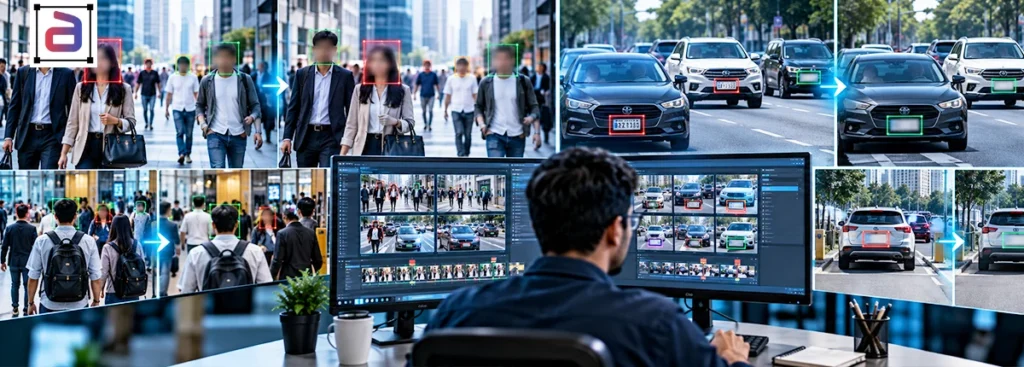
Video has become a critical data source for artificial intelligence (AI), powering applications such as autonomous driving, intelligent surveillance, retail analytics, and smart city infrastructure. Yet, behind every video frame may be sensitive personal information, including recognizable faces, vehicle license plates, and other identifying details. When this information enters AI training datasets without adequate safeguards, […]
Annotating Training Data for Text-to-Video Models: Captions, Motion Quality, and Preference Ranking

Imagine generating a video from a simple prompt: “A cyclist rides through a busy city street as sunlight reflects off the buildings.” The resulting video may look impressive at first glance, but closer inspection could reveal unnatural movement, disappearing vehicles, inconsistent lighting, or actions that do not match the description. These challenges highlight a fundamental […]
Dense Video Captioning and Temporal Grounding Annotation for Video-Language Models
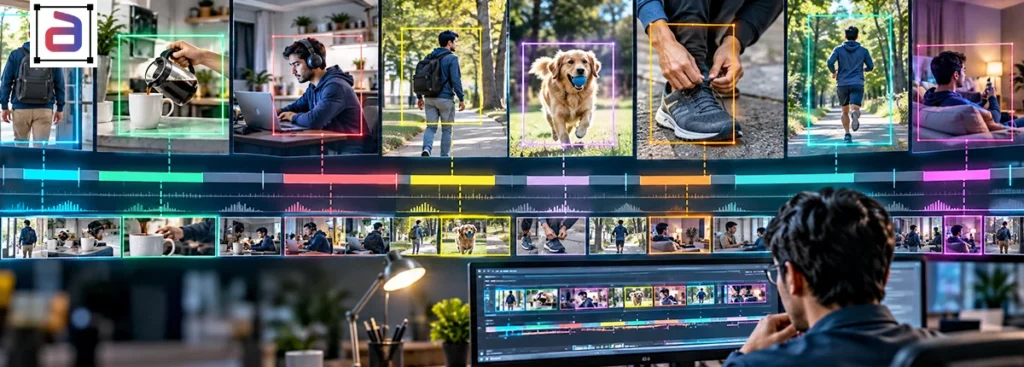
A video is more than a collection of images. It is a sequence of events, interactions, and actions that unfold over time. For AI systems to understand a person opening a door, a vehicle changing lanes, or a robot picking up an object, they must interpret not only what appears on screen but also how […]
In-Cabin Video Annotation for Driver Monitoring Systems: Drowsiness, Distraction, and Gaze
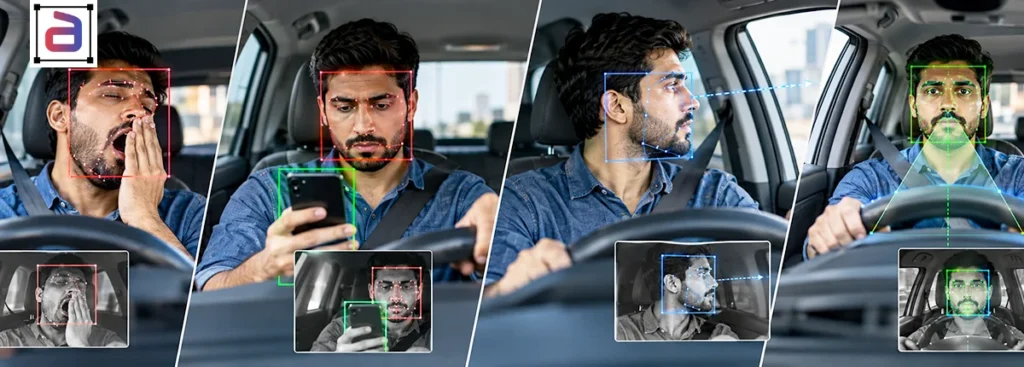
What if a vehicle could recognize when its driver is losing focus before a dangerous situation develops? This is one of the critical objectives of modern Driver Monitoring Systems (DMS), which use computer vision and artificial intelligence (AI) to analyze driver behavior and identify potential safety risks. As automotive technology advances, monitoring driver alertness is […]
Hand-Object Interaction Annotation in Egocentric Video for Robot Learning
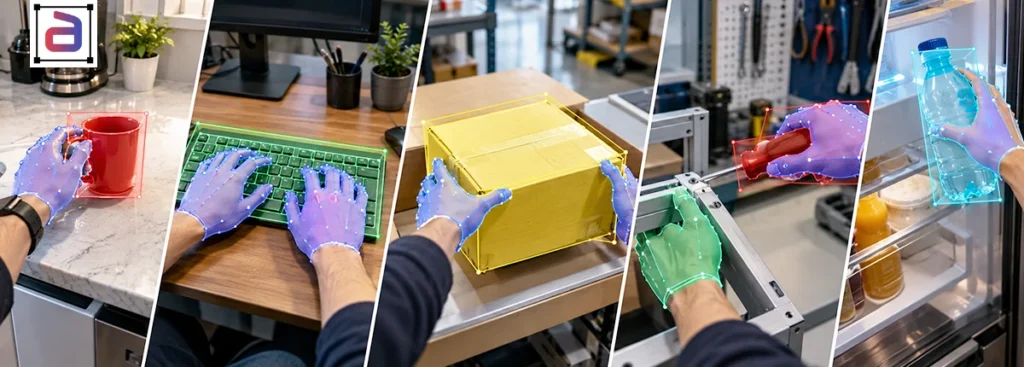
Imagine a robot that can watch a person pick up a cup, open a cabinet, or assemble a component and then learn how to perform the same task. Achieving this level of adaptability requires more than recognizing objects in a video. Robots must understand how human hands interact with objects, how actions unfold over time, […]
Auto-Labeling Video with SAM-Style Foundation Models: Where Human Review Still Matters
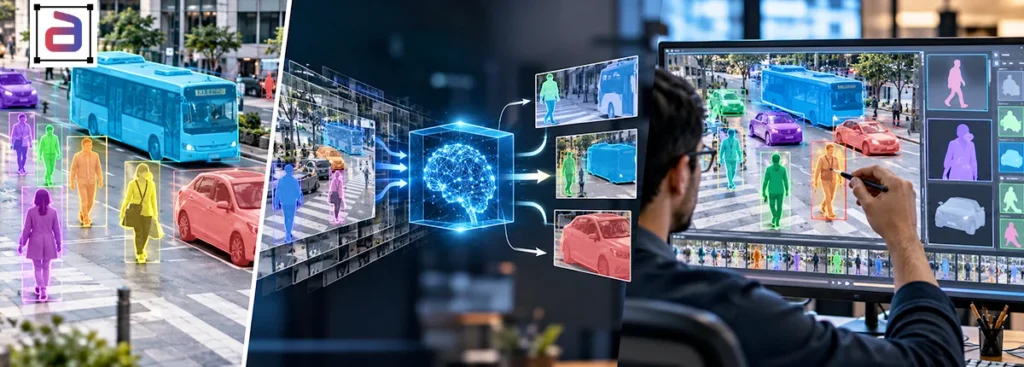
Video annotation is undergoing a major transformation. Foundation models inspired by Meta’s Segment Anything Model (SAM) are helping computer vision teams identify objects, generate segmentation masks, and propagate annotations across video frames with significantly less manual effort. For organizations building AI-powered systems, these capabilities offer an opportunity to accelerate dataset preparation without compromising the quality […]
Video Annotation for Workplace Safety AI: PPE Compliance, Restricted Zones, and Near-Miss Detection
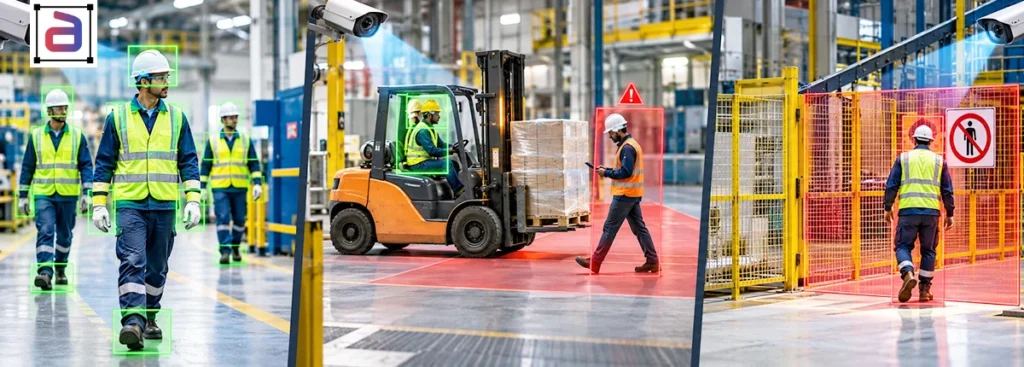
Workplace safety is no longer just about responding to accidents after they happen. Across manufacturing facilities, construction sites, warehouses, and logistics operations, organizations are increasingly adopting artificial intelligence (AI) to identify hazards, monitor unsafe activities, and prevent incidents before they escalate. Yet, even the most sophisticated computer vision system is only as effective as the […]
Cross-Camera Re-Identification: Annotating Identity Across Multi-Camera Video Networks
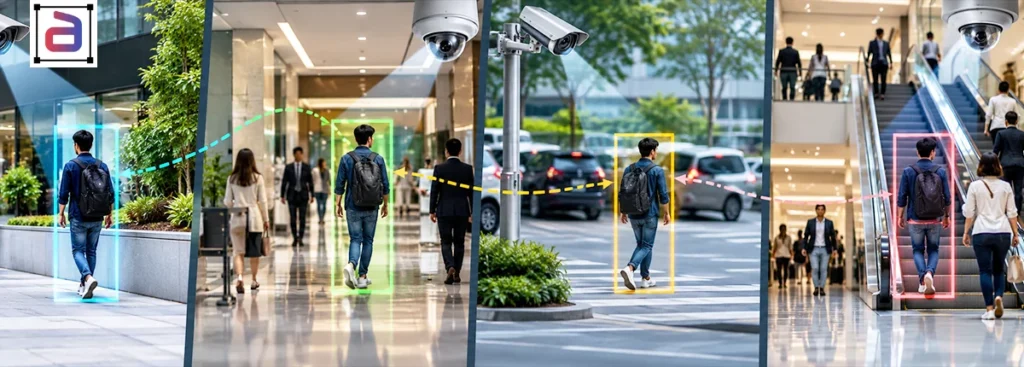
A person enters a shopping mall through the main entrance, walks past several corridors, and eventually reaches a checkout counter. Multiple cameras capture this journey, but each camera records a different perspective, lighting condition, and field of view. How can an AI system determine that these separate observations belong to the same individual? This is […]
Handling Motion Blur in Video Annotation: Strategies for High-Speed Computer Vision Datasets
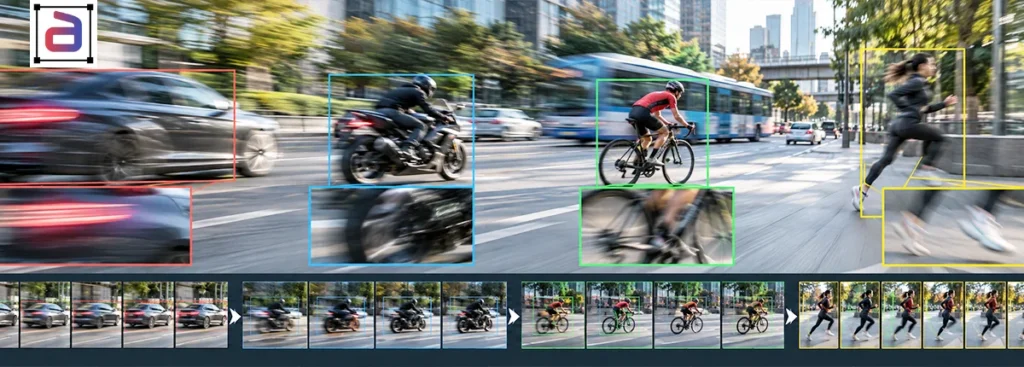
A vehicle accelerates through an intersection. A robotic arm rapidly picks up an object. An athlete changes direction in a fraction of a second. In each scenario, motion blur can obscure the visual details that computer vision models need to understand the scene accurately. For AI developers, this creates a critical data challenge. Blurred edges, […]
Video Annotation for Human-Object Interaction: Teaching AI to Understand Actions and Context
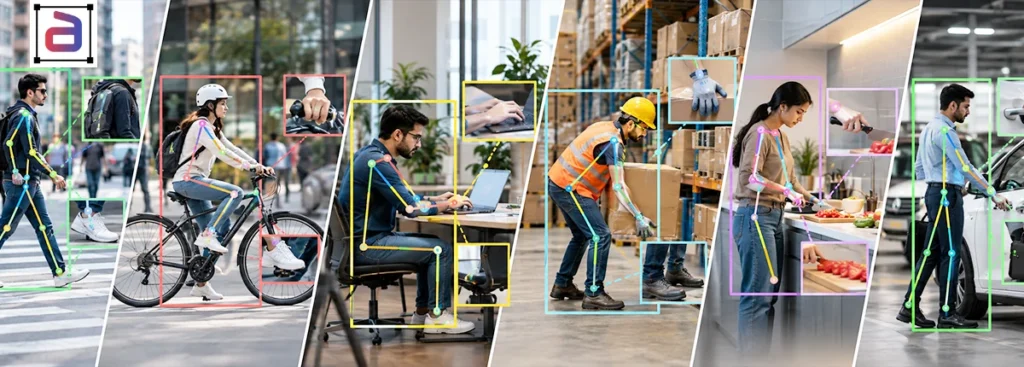
AI can identify a person. It can recognize a chair, a cup, a vehicle, or a machine. But can it understand what the person is doing with that object? That is a much harder problem. A person reaching toward a cup, picking it up, drinking from it, and placing it back involves several connected actions. […]